
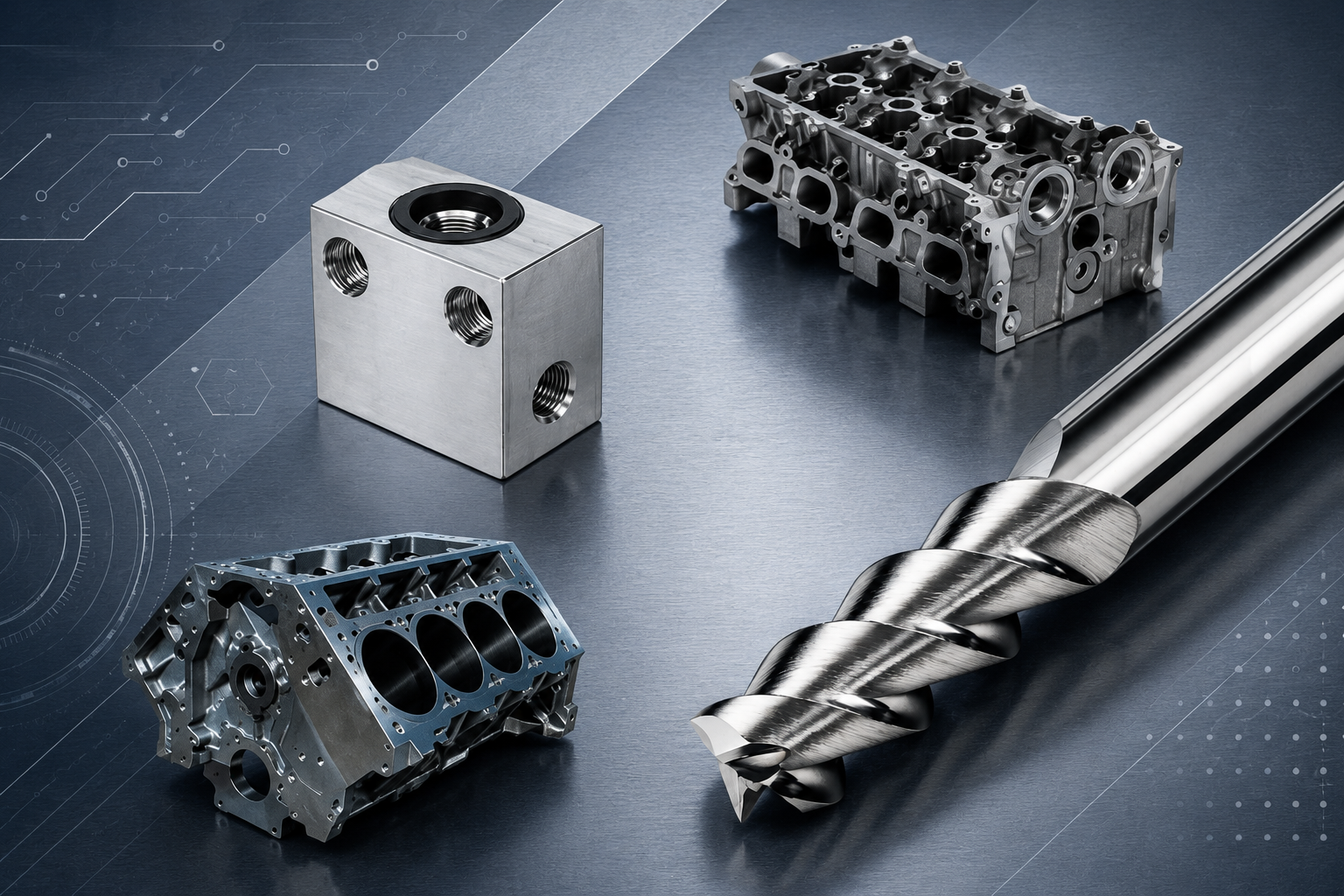
Cutting tool geometry is one of the most important factors influencing machining performance. Even when using the same cutting tool material, changes in geometry can produce significant differences in cutting behaviour.
Parameters such as rake angle, clearance angle, edge preparation, corner radius, flute geometry, and cutting-edge design influence cutting forces, heat generation, chip formation, and tool wear.
A geometry designed for roughing may not deliver the same results during finishing. Similarly, a tool designed for aluminum may require a completely different geometry for hardened steel or titanium.
MSTM focuses on application-specific tool design, combining tool geometry, substrate, coating, and machining parameters to develop solutions suited to individual customer requirements.